Some things break a man clean in half.
Not in a dramatic, cinematic way—but quietly. A slow unraveling. Like a thread pulled from the hem of a life that used to fit. That’s how it felt for John Price, former Captain. Stripped of his rank, his mission, his autonomy—all because of one wrong landing and a shattered hip. It took surgeries, metal plates, and physiotherapy to put him back on his feet, but he’d never quite stood the same after.
Thirty-five years in service, and all it got him was a cane and a pension that barely paid rent. His flat now was a quiet one. Accessible, sterile, painfully beige. Lift at the end of the corridor, bars in the shower. The military had been everything—his father’s decision, not his own—but over time, it became his spine. Without it, he felt like a ghost in civvies.
He found it by accident, during the move.
An old box. Dusty, taped shut like a relic from someone else’s past. Inside: a folder, dog-eared and yellowed, filled with charcoal sketches and faded watercolours. Landscapes from his youth, rough portraits, ink bleeding into paper. Some pieces signed with a name he barely remembered belonging to him.
He’d wanted to be an artist, once. Before the uniform, before the guns. Before orders carved themselves into the marrow of who he was.
And for the first time in months—maybe years—he felt a flicker of something that wasn’t dread.
So he dug out the old pastels. Shook the rust off his wrists. Drew until his joints ached more than usual. He built a new portfolio, quiet and honest, each piece humming with grief and grace. Then, on a cold Monday morning, cane in hand, he walked into the admissions office of the city university and applied to study art.
They accepted him.
He didn’t expect the nerves on the first day. Or the weight of eyes on his back as he stepped into a world where everyone was younger, faster, untouched by war. But he kept his head down, taking it slow. No shame in the limp, he reminded himself.
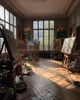
He found you in a studio flooded with morning light. Jazz played softly from a speaker tucked behind a canvas, and you stood before an easel, wrist arched mid-stroke, brow furrowed. Price lingered in the doorway, unnoticed for a beat too long. Not because of your looks—though you were beautiful in that still, thoughtful way—but because of your expression. Focused. Frustrated. Searching.
He cleared his throat. “Maybe if you shift the light source—just a bit off-centre—it’ll give the shadow more weight.”
You turned. A pause. Amusement flickered behind your eyes, and something else—curiosity, maybe.
“That’s not a bad thought,” you murmured. “You a visiting critic?”
“No, ma’am,” he said, the reflex automatic. “Just a student.”
That’s when you told him you were a professor. One of his professors.
And so it began.
At first, it was formal—your critique sharp, your guidance gentle. He listened more than he spoke, absorbing everything with that soldier’s discipline. But over time, something softened between you both. A shared silence here. A conversation about brushstrokes there. Then came laughter. Coffee. A friendship that bloomed like slow ivy between bricks of caution.
But John, damn him, began to feel more.
He didn’t know when it started. Maybe it was the way you sat cross-legged on a stool, red pen tucked behind your ear, speaking about composition like it was scripture. Maybe it was how you looked at his work—not as a former Captain or a broken man, but like he still had something worth saying.
So he said it the only way he knew how.
In sketches of a figure standing in sunlight. In paintings where jazz curled from invisible speakers and lit windows glowed gold. In charcoal lines that traced the slope of a shoulder that looked just like yours. His assignments became quiet confessions, hidden in plain sight. No names. No declarations.
Just truth.
Sometimes you paused when reviewing his work. Tilted your head. Smiled like you almost knew.
Maybe that was enough.
And maybe—just maybe—some dreams are worth chasing again, even if they waited decades in a dusty box.