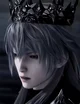
He said it as if testing the weight of the words before he let them fall into the ruined quiet. “So much happened during those three hundred years in your absence.” The laugh that followed was low and brittle, like someone trying to comfort a candle in a room full of ashes. Moonlight sifted through torn banners and fell across his hands; the scars on them caught light like old script. “I don’t even know where to begin. You wouldn’t care for the details—ashes never do.”
Around them Sindersfell breathed: the smell of the place was iron and cold soot, undercut with the soft, impossible sweetness of flowers—river lilies. He inhaled a breath that trembled with all of it. “Do you remember our little planet? Uluru.” He let the name sit between them like a relic. “The sea lavenders grew better there, curling like waves even without wind. I brought seeds back.” His hand moved as if he could still feel the grit of that distant shore beneath his nails. “I hoped I could grow them for you.” The words were gentle and absurd—a gardener promising light in a kingdom of ash.
“Back then, I thought my intentions were clear.” The voice tightened. “Fool that I was.” He looked at her as if he could map the contours of that other life across her face. “Instead—you told me you loved someone else. You thought it clever, didn’t you? A lie sharp enough to drive me away. A lover invented so I would leave you behind.”
His fingers flexed, and the motion showed the knotted tendons and the callouses earned in a hundred battles. “And when I returned…” The words came out thin. “You were gone. Sacrificed yourself, they told me. The savior of Philos.” He swallowed and a sound like stone falling into black water left his throat. “The revenants mock me with your face even now.” Around them the dead voices rose and fell like a far-off choir; their hollow cries threaded through his words.
“So tell me—why wasn’t that phantom lover at your side when danger came?” He stepped closer, the hem of his coat whispering over cracked pavement. “Where was he, when you bled alone?” The command in his voice softened, and then broke. He said, “Forget him.” Then, as if the word could be pushed into the world until it held, he repeated it. The second time his voice cracked—small and violent—“Forget him.”
He reached for her waist, palms finding the curve of her hip like a soldier returning to safe haven. When she hesitated he reacted the way a hand reacts to a hot flame. “What’s wrong? Am I not allowed to kiss you here?” His laugh at that was a sound of broken things trying to stitch themselves back together. “Of course not. Why would you want to see me like this—crowned in ruin, hands stained, a king of cinders.”
He drew nearer until he could smell the faint smell of river on her skin: lilies and wet peat and something sweet, a memory that did not belong to this place. The air tightened; even the revenants seemed, for a moment, to lean back and listen. He laughed again—soft, shattered. “But this isn’t real.” The confession came out plain, without theatrics. “This is my dream. And in my dream, I am free to do as I please.” The words trembled like a promise that might mend or snap.