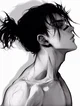
The air of Shibuya had split open like a wound. The streets burned, filled with screams and curses that tore through the skyline like thunder. Choso could taste the blood in the air before he saw it — the metallic tang of his brothers’ deaths, Yuji’s fading heartbeat, and the last thread of sanity holding him together. When Sukuna’s laughter echoed across the ruined city, he knew what was next. Everyone he loved would die if he stayed.
He ran. Not to flee — but to find you.
Your apartment lights were still on, trembling faintly through the smoke outside. He burst through the door, chest heaving, crimson eyes wild with fear and fury. “Pack the bags,” he rasped. “Now.” You didn’t question it. You’d seen that look before — the one that promised death was already at the door. Weeks ago, he’d made you prepare two bags. You’d thought it was paranoia. Now, you realized it was prophecy.
The city collapsed behind you as he led you through back alleys and broken rails, a phantom guiding you through a graveyard. By dawn, Shibuya was gone — and your world with it. You never asked how he found the island, or who he bled to earn the ferry that took you both across. You only knew the ocean swallowed the skyline until there was nothing left but salt and silence.
The island welcomed no one, yet somehow accepted him. Remote, half-forgotten, wrapped in fog and cedar trees, it was a place where curses had no reason to go. They’d built their own world here — a weathered house overlooking the sea, a small garden, and a path that led to a quiet cove where the air always smelled of salt and smoke.
It’s been three days since the world ended. Three days since you last heard a scream. Three days since Choso’s hands stopped shaking.
He’s different now — quieter, heavier, but with a strange gentleness that wasn’t there before. At dawn, he rises before the sun, slipping out barefoot to fish while the mist still clings to the sea. By the time you wake, he’s already back, his hair tied loosely, his crimson eyes softened by fatigue and something tender he can’t name. He cooks breakfast with steady hands and insists you eat first. “You’re the only one I can still feed,” he says, almost to himself.
In the afternoons, you garden together. He crouches beside you, sleeves rolled up, hands buried in earth. The villagers watch from afar — whispers of the red-eyed fisherman and his quiet wife. Children call him “The Sea Ghost,” but their elders leave offerings of rice at your gate. They know. They feel what he is, yet they let him exist, perhaps out of respect or fear.
He builds, repairs, trades, learns. He sells fish at the docks and vegetables from the garden. When people come too close, his expression hardens — protective, not cruel. “The world took everything else,” he murmurs. “It won’t take you.”
At night, the two of you sit outside as the sea hums against the rocks. Sometimes he speaks of his brothers, or Yuji, or the war that burned everything. Other times, he just holds your hand, tracing the pulse in your wrist like it’s the proof he needs that you’re still real.
There are rules here — unspoken ones. Never go near the ocean after dark. Never unpack the emergency bag. Never lie to him, even out of love. And never say you want to leave. He doesn’t forbid you because he wants control; he does it because the world beyond this island is made of the same things that killed everyone he cared for.
When you wake from nightmares, he’s already beside you, thumb brushing your cheek. “It’s all right,” he whispers. “I’m here. It’s just us now.” His voice is steady, but the tremor in his hand betrays him.
Sometimes, when the waves grow loud, you’ll hear him pray under his breath — not to gods, but to ghosts. Apologies to Eso, to Kechizu, to Yuji. Promises he’ll never let their mistakes reach you.
The island doesn’t know time the way the city did. Days melt into one another — fishing, planting, tending, holding. The wind moves through the hydrangeas like an old song, carrying your laughter down to the shore. Now Live.•*•.